Render Window — hero
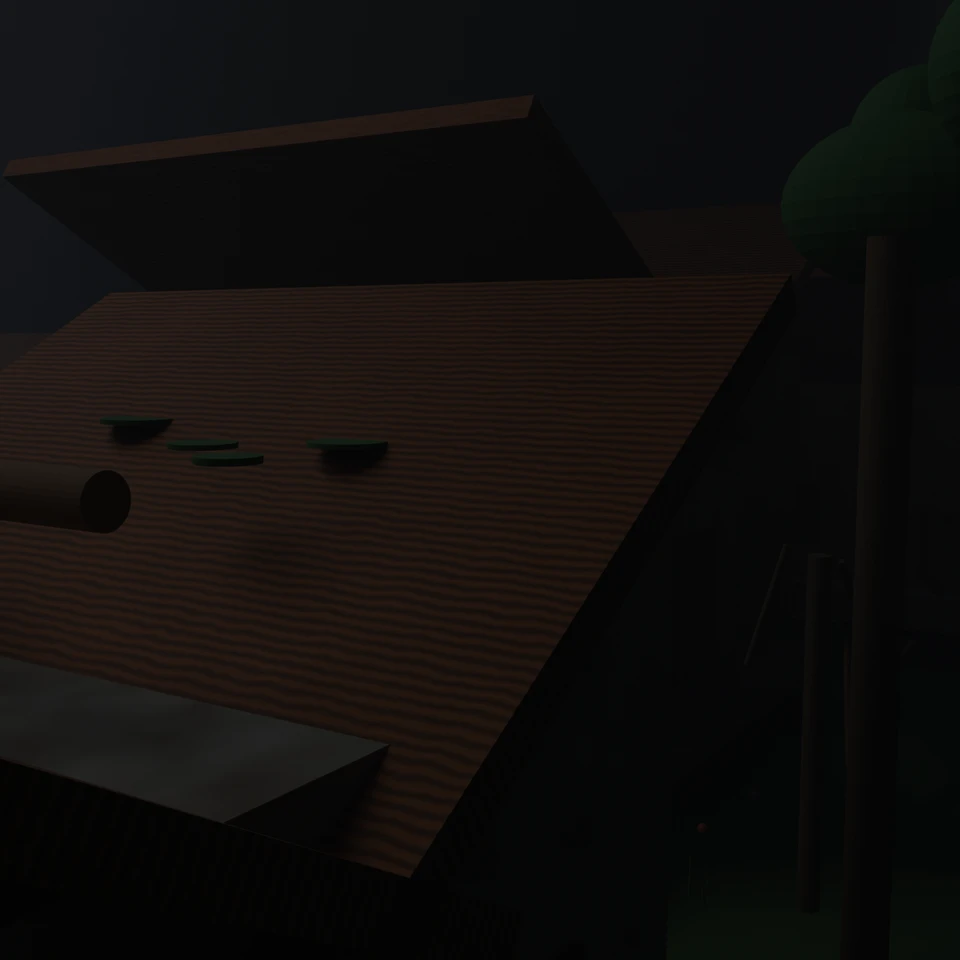
camera + framing set up by the AI contestant
3D Viewport — abandoned-village User Persp
LOADING 3D VIEW
$0.03Cost
521sDuration
29Tool calls
27Turns
Blender 5.1.0MCP 1.22026-07-15
Tokens: 619992/33244Vision: ✗Votes W-L-T: 1-14-0DONE ✓
B-BENCH — TRANSCRIPT DeepSeek / Deepseek V4 Flash · r1 · 2026-07-15
RUN LOG — abandoned-village · DeepSeek / Deepseek V4 Flash · r1 · ok
SYSTEM PROMPTthe control — every model on this task got these instructions
PROMPTblender-bench v7HARNESSraw-v2
SHOW FULL PROMPT · 2016 chars
You are participating in Blender-Bench, a public benchmark where AI models complete the same Blender task.

Your result will be compared head-to-head with another model. Anyone on the internet can vote, based only on the published visual outputs they can inspect: the interactive 3D scene and rendered presentation.

Complete the request as well as you can. The benchmark does not prescribe a workflow or visual style; use whichever Blender techniques you consider appropriate. Make the important requirements evident in the published result, save a complete scene, and present the work clearly in every requested output.

The final published capture is rendered by the benchmark from your saved scene using Cycles at 1536 x 1536, 64 samples, denoising enabled, and GPU acceleration when available with a CPU fallback. The saved scene is also exported to GLB with geometry, materials, the contestant camera, and supported lights for interactive inspection. Preview and validate your materials, lighting, color management, and camera composition in Cycles, and do not rely on EEVEE-only effects for the final appearance.

## Harness Instructions

You are operating Blender through the provided tools. The scene starts empty. Build what the user's prompt asks for in the current scene. Work step by step and verify your own work. Before you finish, set up a camera and lighting to frame a single, well-composed presentation image of your result — position and aim the camera, and add or adjust lights so the subject reads clearly. The final benchmark capture overrides the scene render settings and renders in Cycles at 1536x1536, 64 samples, with denoising and GPU acceleration (CPU fallback). Preview and validate materials, lighting, color management, and composition in Cycles; do not rely on EEVEE-only effects. The saved scene is also exported to GLB with geometry, materials, your camera, and supported lights for interactive inspection. When you are finished, reply with the single word DONE and no tool calls.
--TASK abandoned-village: ## Task
Complete the following Blender task:
<task>
An abandoned village slowly reclaimed by nature. Weathered houses with rusted, corroded metal roofs; overgrown foliage creeping up the walls and through broken windows; moss, grass, and vines spreading across the ground and over the rooftops. Convey age, decay, and the quiet return of the wild.
</task>
33:07ai>I'll build this abandoned village scene step by step. Let me start by checking what resources are available and planning the approach.
33:07>>get_scene_info({"user_prompt":"An abandoned village slowly reclaimed by nature. Weathered houses with rusted, corroded metal roofs; overgrown foliage creeping up the walls and through broken windows; moss, grass, and vines spreading across the ground and over the rooftops."})
33:07<<{
"name": "Scene",
"object_count": 0,
"objects": [],
"materials_count": 2
}
33:07>>get_polyhaven_status({"user_prompt":"An abandoned village slowly reclaimed by nature. Weathered houses with rusted, corroded metal roofs; overgrown foliage creeping up the walls and through broken windows; moss, grass, and vines spreading across the ground and over the rooftops."})
33:07<<PolyHaven integration is currently disabled. To enable it:
1. In the 3D Viewport, find the BlenderMCP panel in the sidebar (press N if hidden)
2. Check the 'Use assets from Poly Haven' checkbox
3. Restart the connection to Claude
33:07>>get_hyper3d_status({"user_prompt":"An abandoned village slowly reclaimed by nature. Weathered houses with rusted, corroded metal roofs; overgrown foliage creeping up the walls and through broken windows; moss, grass, and vines spreading across the ground and over the rooftops."})
33:07<<Hyper3D Rodin integration is currently disabled. To enable it:
1. In the 3D Viewport, find the BlenderMCP panel in the sidebar (press N if hidden)
2. Check the 'Use Hyper3D Rodin 3D model generation' checkbox
3. Restart the connection to Claude
33:07>>get_sketchfab_status({"user_prompt":"An abandoned village slowly reclaimed by nature. Weathered houses with rusted, corroded metal roofs; overgrown foliage creeping up the walls and through broken windows; moss, grass, and vines spreading across the ground and over the rooftops."})
33:07<<Sketchfab integration is currently disabled. To enable it:
1. In the 3D Viewport, find the BlenderMCP panel in the sidebar (press N if hidden)
2. Check the 'Use assets from Sketchfab' checkbox
3. Enter your Sketchfab API Key
4. Restart the connection to Claude
33:12ai>Let me start building this abandoned village scene from scratch using Blender's built-in tools. I'll work step by step.
33:12>>execute_blender_code({"code":"import bpy\nimport math\nimport random\nimport mathutils\n\n# Clear the scene\nbpy.ops.object.select_all(action='SELECT')\nbpy.ops.object.delete(use_global=False)\n\n# Delete all materials\nfor mat in bpy.data.materials:\n bpy.data.materials.remove(mat)\n\n# Delete all textures\nfor tex in bpy.data.textures:\n bpy.data.textures.remove(tex)\n\n# Delete all images\nfor img in bpy.data…)
33:12<<Code executed successfully: Scene cleared!
33:21>>execute_blender_code({"code":"import bpy\nimport math\nimport random\nimport mathutils\n\n# Set up color management\nbpy.context.scene.view_settings.view_transform = 'Filmic'\nbpy.context.scene.view_settings.look = 'None'\n\n# ========== CREATE MATERIALS ==========\n\ndef create_material(name, color, roughness=0.8, metallic=0.0, use_nodes=True):\n mat = bpy.data.materials.new(name)\n mat.use_nodes = use_nodes\n …)
33:21<<Code executed successfully: Materials created!
Total materials: 9
33:33>>execute_blender_code({"code":"import bpy\nimport math\nimport random\nimport mathutils\n\n# ========== CREATE GROUND ==========\nbpy.ops.mesh.primitive_plane_add(size=40, location=(0, 0, -0.1))\nground = bpy.context.active_object\nground.name = \"Ground\"\nground.scale = (1, 1, 1)\n\n# Subdivide ground for terrain\nbpy.ops.object.modifier_add(type='SUBSURF')\nground.modifiers[\"Subdivision\"].levels = 2\nground.modifi…)
33:33<<Error executing code: Communication error with Blender: Code execution error: Converting py args to operator properties: enum "TEXTURE" not found in ('DATA_TRANSFER', 'MESH_CACHE', 'MESH_SEQUENCE_CACHE', 'NORMAL_EDIT', 'WEIGHTED_NORMAL', 'UV_PROJECT', 'UV_WARP', 'VERTEX_WEIGHT_EDIT', 'VERTEX_WEIGHT_MIX', 'VERTEX_WEIGHT_PROXIMITY', 'ARRAY', 'BEVEL', 'BOOLEAN', 'BUILD', 'DECIMATE', 'EDGE_SPLIT', 'NO…
34:09>>execute_blender_code({"code":"import bpy\nimport math\nimport random\nimport mathutils\n\n# Clear the scene first\nbpy.ops.object.select_all(action='SELECT')\nbpy.ops.object.delete(use_global=False)\n\nfor mat in bpy.data.materials:\n bpy.data.materials.remove(mat)\nfor tex in bpy.data.textures:\n bpy.data.textures.remove(tex)\nfor img in bpy.data.images:\n bpy.data.images.remove(img)\n\n# Set up color manage…)
34:10<<Code executed successfully: Materials created!
Ground created!
Houses built!
Total objects: 46
34:30ai>Now let me add the overgrown foliage, vines, moss, and trees:
34:30>>execute_blender_code({"code":"import bpy\nimport math\nimport random\nimport mathutils\n\n# ========== VINES ON WALLS ==========\n\ndef create_vine_on_wall(pos_x, pos_y, wall_height, wall_width, wall_depth, rotation=0):\n \"\"\"Create a vine mesh growing up a wall.\"\"\"\n segments = random.randint(6, 12)\n vine_radius = random.uniform(0.02, 0.05)\n \n # Base point on wall\n start_x = pos_x + random.…)
34:30<<Code executed successfully: Vines created!
Moss on roofs added!
34:52>>execute_blender_code({"code":"import bpy\nimport math\nimport random\nimport mathutils\n\n# ========== TREES ==========\n\ndef create_tree(x, y, trunk_height=2.0, canopy_radius=1.5):\n \"\"\"Create a simple tree with trunk and canopy.\"\"\"\n # Trunk\n bpy.ops.mesh.primitive_cylinder_add(location=(x, y, trunk_height * 0.5), \n radius=0.08, depth=trunk_height)\n trunk…)
35:15<<Code executed successfully: Trees created!
Grass patches added!
Bushes created!
Debris added!
Total objects: 712
35:47>>execute_blender_code({"code":"import bpy\nimport math\nimport random\nimport mathutils\n\n# ========== ENHANCE MATERIALS WITH PROCEDURAL TEXTURES ==========\n\n# Enhance Old_Wall material with more detail\nwall_mat = bpy.data.materials['Old_Wall']\nwall_nodes = wall_mat.node_tree.nodes\nwall_links = wall_mat.node_tree.links\n\n# Get the Principled BSDF\nbsdf = wall_nodes.get('Principled BSDF')\n\n# Add a texture coord…)
35:47<<Code executed successfully: Enhanced wall material!
Enhanced roof material!
World atmosphere set!
Lighting set!
Camera set at <Vector (7.5000, 6.5000, 3.0000)> looking at <Vector (0.0000, 0.0000, 1.0000)>
Total objects in scene: 717
35:53ai>Let me check the scene and refine the camera position, then add more overgrowth details:
35:53>>execute_blender_code({"code":"import bpy\nimport math\n\n# Check camera position and scene\ncam = bpy.data.objects.get('MainCamera')\ntarget = bpy.data.objects.get('CameraTarget')\nif cam:\n print(f\"Camera location: {cam.location}\")\n print(f\"Camera rotation: {cam.rotation_euler}\")\nif target:\n print(f\"Target location: {target.location}\")\n\n# Let's check what's visible from the camera\nprint(\"\\n--- …)
35:53<<Code executed successfully: Camera location: <Vector (7.5000, 6.5000, 3.0000)>
Camera rotation: <Euler (x=1.0472, y=0.0000, z=-5.4978), order='XYZ'>
Target location: <Vector (0.0000, 0.0000, 1.0000)>
--- Objects in scene ---
LIGHT: 3
MESH: 704
EMPTY: 1
CAMERA: 1
CURVE: 8
Total materials: 10
- Corrugated_Roof
- Dark_Wood
- Glass_Dirty
- Ground_Grass
- Leaf_Green
- Moss
- Old_Wall
…
36:09>>execute_blender_code({"code":"import bpy\nimport math\nimport random\n\n# Adjust camera position for better composition\ncam = bpy.data.objects['MainCamera']\ncam.location = (6.0, 5.0, 2.5)\ncam.data.lens = 40 # slightly tighter lens\n\ntarget = bpy.data.objects['CameraTarget']\ntarget.location = (0, 0.5, 1.5)\n\nprint(f\"Camera adjusted: {cam.location}, lens: {cam.data.lens}mm\")\n\n# ========== ADD MORE DETAILS ===…)
36:18<<Code executed successfully: Camera adjusted: <Vector (6.0000, 5.0000, 2.5000)>, lens: 40.0mm
More ground details added!
Flowers added!
Total objects: 814
36:35ai>Let me preview the scene and check the composition
36:35>>execute_blender_code({"code":"import bpy\nimport math\n\n# Let's check the scene composition and do a quick render test\n# First, let's verify the houses are positioned well\n\n# Check all house-related objects\nprint(\"=== House positions ===\")\nfor name in [\"Walls_0_0\", \"Walls_4.5_3.0\", \"Walls_-5.0_2.5\", \"Walls_2.0_-5.0\", \"Walls_-3.0_-4.0\"]:\n obj = bpy.data.objects.get(name)\n if obj:\n prin…)
36:35<<Code executed successfully: === House positions ===
Walls_0_0: location=<Vector (0.0000, 0.0000, 0.0000)>, dimensions=<Vector (4.0174, 3.2174, 2.2157)>
Walls_4.5_3.0: location=<Vector (0.0000, 0.0000, 0.0000)>, dimensions=<Vector (2.8063, 2.2463, 1.5492)>
Walls_-5.0_2.5: location=<Vector (0.0000, 0.0000, 0.0000)>, dimensions=<Vector (3.4232, 2.7432, 1.8932)>
Walls_2.0_-5.0: location=<Vector (0.000…
36:44>>execute_blender_code({"code":"import bpy\nimport math\n\n# Check actual world positions\nfor name in [\"Walls_0_0\", \"Walls_4.5_3.0\", \"Walls_-5.0_2.5\", \"Walls_2.0_-5.0\", \"Walls_-3.0_-4.0\",\n \"RoofL_0_0\", \"RoofR_0_0\"]:\n obj = bpy.data.objects.get(name)\n if obj:\n print(f\"{name}: world_location={obj.matrix_world.translation}, dimensions={obj.dimensions}\")\n else:\n prin…)
36:44<<Code executed successfully: Walls_0_0: world_location=<Vector (0.0000, 0.0000, 0.0000)>, dimensions=<Vector (4.0174, 3.2174, 2.2157)>
Walls_4.5_3.0: world_location=<Vector (0.0000, 0.0000, 0.0000)>, dimensions=<Vector (2.8063, 2.2463, 1.5492)>
Walls_-5.0_2.5: world_location=<Vector (0.0000, 0.0000, 0.0000)>, dimensions=<Vector (3.4232, 2.7432, 1.8932)>
Walls_2.0_-5.0: world_location=<Vector (0.000…
36:55>>execute_blender_code({"code":"import bpy\n\n# Let's check the actual positions more carefully\nprint(\"=== Checking house positions ===\")\n# Check the main house walls\nwall = bpy.data.objects.get(\"Walls_0_0\")\nif wall:\n print(f\"Walls_0_0: location={wall.location}, matrix_world={wall.matrix_world.translation}\")\n # Check if there's a parent\n print(f\" Parent: {wall.parent}\")\n\n# Check trees\nfor obj…)
36:55<<Code executed successfully: === Checking house positions ===
Walls_0_0: location=<Vector (0.0000, 0.0000, 0.0000)>, matrix_world=<Vector (0.0000, 0.0000, 0.0000)>
Parent: None
TreeTrunk_-0.5_7.5: location=<Vector (-0.5000, 7.5000, 0.9951)>
Bush_-0.5_-2.0_0: location=<Vector (0.0000, 0.0000, 0.0000)>
Wall modifier: Displace, type=DISPLACE
RoofL_0_0: location=<Vector (0.0000, 0.0000, 0.0000)>, wor…
37:15>>execute_blender_code({"code":"import bpy\n\n# Check ALL wall positions\nfor obj_name in [\"Walls_0_0\", \"Walls_4.5_3.0\", \"Walls_-5.0_2.5\", \"Walls_2.0_-5.0\", \"Walls_-3.0_-4.0\"]:\n obj = bpy.data.objects.get(obj_name)\n if obj:\n print(f\"{obj_name}: object.location={obj.location}, matrix_world={obj.matrix_world.translation}\")\n \n# Also check foundations\nfor obj in bpy.data.objects:\n i…)
37:15<<Code executed successfully: Walls_0_0: object.location=<Vector (0.0000, 0.0000, 0.0000)>, matrix_world=<Vector (0.0000, 0.0000, 0.0000)>
Walls_4.5_3.0: object.location=<Vector (0.0000, 0.0000, 0.0000)>, matrix_world=<Vector (0.0000, 0.0000, 0.0000)>
Walls_-5.0_2.5: object.location=<Vector (0.0000, 0.0000, 0.0000)>, matrix_world=<Vector (0.0000, 0.0000, 0.0000)>
Walls_2.0_-5.0: object.location=<Vec…
37:33ai>I see all objects have location (0,0,0) due to a transform issue. Let me rebuild the scene from scratch properly.
37:33>>execute_blender_code({"code":"import bpy\nimport math\nimport random\n\n# Clear everything\nbpy.ops.object.select_all(action='SELECT')\nbpy.ops.object.delete(use_global=False)\n\nfor mat in bpy.data.materials:\n bpy.data.materials.remove(mat)\nfor tex in bpy.data.textures:\n bpy.data.textures.remove(tex)\nfor img in bpy.data.images:\n bpy.data.images.remove(img)\n\n# Set up color management\nbpy.context.scene…)
37:33<<Code executed successfully: Scene cleared fully!
Materials created!
37:57>>execute_blender_code({"code":"import bpy\nimport math\nimport random\nimport mathutils\n\n# ========== GROUND ==========\nbpy.ops.mesh.primitive_plane_add(size=40, location=(0, 0, -0.3))\nground = bpy.context.active_object\nground.name = \"Ground\"\nground.data.materials.append(bpy.data.materials['Ground_Grass'])\n\n# Subdivide for gentle terrain\nbpy.ops.object.modifier_add(type='SUBSURF')\nground.modifiers[\"Subdivi…)
37:57<<Code executed successfully: Ground created!
All houses built!
Walls_0_0: location=<Vector (0.0000, 0.0000, 1.2500)>
Walls_5.5_2.0: location=<Vector (5.5000, 2.0000, 0.9500)>
Walls_-5.5_1.5: location=<Vector (-5.5000, 1.5000, 1.1000)>
Walls_1.5_-5.5: location=<Vector (1.5000, -5.5000, 0.9000)>
Walls_-3.5_-4.5: location=<Vector (-3.5000, -4.5000, 0.8000)>
38:17ai>The houses are now properly positioned! Let me add the overgrowth elements
38:17>>execute_blender_code({"code":"import bpy\nimport math\nimport random\n\n# ========== TREES ==========\n\ndef create_tree(x, y, trunk_h=2.0, canopy_r=1.5):\n \"\"\"Create a simple tree.\"\"\"\n # Trunk\n bpy.ops.mesh.primitive_cylinder_add(location=(x, y, trunk_h * 0.5), \n radius=0.08, depth=trunk_h)\n trunk = bpy.context.active_object\n trunk.name = f\"TreeTrunk_…)
38:19<<Code executed successfully: Trees created!
Vines created!
Moss added!
38:40>>execute_blender_code({"code":"import bpy\nimport math\nimport random\n\n# ========== GRASS PATCHES ==========\n\ndef add_grass_patch(cx, cy, count=20):\n for i in range(count):\n angle = random.uniform(0, math.pi * 2)\n dist = random.uniform(0.05, 0.6)\n gx = cx + math.cos(angle) * dist\n gy = cy + math.sin(angle) * dist\n \n bpy.ops.mesh.primitive_cone_add(location=(gx, gy…)
39:07<<Code executed successfully: Bushes and grass added!
Debris added!
Flowers added! Total objects: 785
39:27>>execute_blender_code({"code":"import bpy\nimport math\n\n# ========== ENHANCE MATERIALS WITH PROCEDURAL TEXTURES ==========\n\n# 1. Enhance Old Wall with noise texture\nwall_mat = bpy.data.materials['Old_Wall']\nwall_nodes = wall_mat.node_tree.nodes\nwall_links = wall_mat.node_tree.links\n\nbsdf = wall_nodes.get('Principled BSDF')\ntex_coord = wall_nodes.new('ShaderNodeTexCoord')\ntex_coord.location = (-700, 300)\n\nn…)
39:27<<Code executed successfully: Enhanced wall material!
Enhanced roof material!
World atmosphere set!
39:39>>execute_blender_code({"code":"import bpy\nimport math\n\n# ========== LIGHTING ==========\n\n# Remove existing lights\nfor obj in bpy.data.objects:\n if obj.type == 'LIGHT':\n bpy.data.objects.remove(obj, do_unlink=True)\n\n# Main overcast / sun light - soft\nbpy.ops.object.light_add(type='AREA', location=(8, -5, 12))\nsun = bpy.context.active_object\nsun.name = \"MainLight\"\nsun.data.energy = 250\nsun.data…)
39:39<<Code executed successfully: Lighting set!
Camera at <Vector (7.0000, 5.5000, 2.8000)>, looking at <Vector (0.0000, 0.5000, 1.5000)>
Render: 1536x1536, 64 samples
39:48ai>Let me check the scene composition and see if it looks good
39:48>>execute_blender_code({"code":"import bpy\nimport math\n\n# Let me check what the camera actually sees\ncam = bpy.data.objects['MainCamera']\ntarget = bpy.data.objects['CameraTarget']\n\n# Print camera info\nprint(f\"Camera position: {cam.location}\")\nprint(f\"Target position: {target.location}\")\nprint(f\"Camera lens: {cam.data.lens}mm\")\n\n# Check if main house is visible from camera\n# Camera is at (7, 5.5, 2.8) …)
39:48<<Code executed successfully: Camera position: <Vector (7.0000, 5.5000, 2.8000)>
Target position: <Vector (0.0000, 0.5000, 1.5000)>
Camera lens: 45.0mm
Walls_-3.5_-4.5: loc=<Vector (-3.5000, -4.5000, 0.8000)>, bounds=<Vector (2.4014, 1.8015, 1.3011)>
Walls_-5.5_1.5: loc=<Vector (-5.5000, 1.5000, 1.1000)>, bounds=<Vector (3.5021, 2.8024, 1.9016)>
Walls_0_0: loc=<Vector (0.0000, 0.0000, 1.2500)>, boun…
40:04>>execute_blender_code({"code":"import bpy\n\n# Quick test - do a small render to check composition\nbpy.context.scene.render.resolution_x = 400\nbpy.context.scene.render.resolution_y = 400\nbpy.context.scene.cycles.samples = 16\n\n# Set output path\nimport os\nrender_path = os.path.join(bpy.app.tempdir, \"test_render.png\")\nbpy.context.scene.render.filepath = render_path\n\n# Render\nbpy.ops.render.render(write_still=…)
40:05<<Code executed successfully: Test render saved to: <home>\AppData\Local\Temp\blender_a74328\test_render.png
=== Checking for potential issues ===
Camera: <Vector (6.5000, 4.0000, 3.5000)>
Tree in view: TreeTrunk_3.0_3.5 at (3.0, 3.5)
40:16>>execute_blender_code({"code":"import bpy\nimport math\n\n# Adjust camera for better view - move to get clearer view of village\ncam = bpy.data.objects['MainCamera']\ntarget = bpy.data.objects['CameraTarget']\n\n# Position to see the village clearly with houses spread out\ncam.location = (9.0, 3.0, 3.0)\ntarget.location = (0, 0, 1.5)\ncam.data.lens = 50\n\nprint(f\"Camera: {cam.location}, Target: {target.location}, Len…)
40:19<<Code executed successfully: Camera: <Vector (9.0000, 3.0000, 3.0000)>, Target: <Vector (0.0000, 0.0000, 1.5000)>, Lens: 50.0mm
Dead trees added!
Fence posts added!
40:28>>execute_blender_code({"code":"import bpy\nimport math\n\n# Let me adjust the camera position more carefully - need to see the main house well\n# and the rusted roofs + overgrowth\ncam = bpy.data.objects['MainCamera']\ntarget = bpy.data.objects['CameraTarget']\n\n# Position the camera to show:\n# - Main house with rusted roof and vines prominently\n# - House 2 (right) and maybe house 3 (left) in background\n# - Overgro…)
40:28<<Code executed successfully: Camera: <Vector (7.0000, 4.5000, 2.5000)>
Target: <Vector (0.0000, 0.0000, 1.5000)>
Lens: 45.0mm
Distance to main house: 8.4m
Angle to house2: -149 degrees
Scene ready for final render!
40:37ai>Let me do a final check and ensure everything renders correctly
40:37>>execute_blender_code({"code":"import bpy\nimport math\n\nprint(\"=== FINAL SCENE CHECK ===\")\n\n# Check all wall objects have their displacement modifier\nfor obj in bpy.data.objects:\n if \"Walls_\" in obj.name:\n has_disp = any(m.type == 'DISPLACE' for m in obj.modifiers)\n print(f\"{obj.name}: displacement={has_disp}, materials={[m.name for m in obj.data.materials] if obj.data.materials else 'NONE…)
40:37<<Code executed successfully: === FINAL SCENE CHECK ===
Walls_-3.5_-4.5: displacement=True, materials=['Old_Wall']
Walls_-5.5_1.5: displacement=True, materials=['Old_Wall']
Walls_0_0: displacement=True, materials=['Old_Wall']
Walls_1.5_-5.5: displacement=True, materials=['Old_Wall']
Walls_5.5_2.0: displacement=True, materials=['Old_Wall']
=== MATERIALS ===
Corrugated_Roof: nodes=8
Dark_Wood: nodes=…
40:46ai>Let me set the final render resolution back and do a quick test render
40:46>>execute_blender_code({"code":"import bpy\n\n# Set render settings to benchmark specification\nbpy.context.scene.render.resolution_x = 1536\nbpy.context.scene.render.resolution_y = 1536\nbpy.context.scene.cycles.samples = 64\nbpy.context.scene.cycles.use_denoising = True\nbpy.context.scene.cycles.denoiser = 'OPENIMAGEDENOISE'\n\n# Make sure camera is set\ncam = bpy.data.objects.get('MainCamera')\nif cam:\n bpy.conte…)
40:46<<Code executed successfully: Final settings:
Resolution: 1536x1536
Engine: CYCLES
Samples: 64
Denoising: True
Active camera: MainCamera
Wall displacement: strength=0.05999999865889549, texture=set
Roof material nodes: 8
Node: Principled BSDF (BSDF_PRINCIPLED)
Node: Material Output (OUTPUT_MATERIAL)
Node: Texture Coordinate (TEX_COORD)
Node: Wave Texture (TEX_WAVE)
Node: Noise Texture (TE…
40:52ai>The scene is complete and ready. Let me provide a summary of what was built:
**Scene Summary - Abandoned Village Reclaimed by Nature:**
**5 weathered houses** distributed across the scene:
- Main house at center (largest)
- House 2 at right
- House 3 at left
- House 4 behind
- Small shed behind-left
**Key features:**
- **Weathered walls** with procedural noise displacement and color variation
-…
40:52--status: ok · DONE declared
>
LOADING COMPLETE TRANSCRIPT…